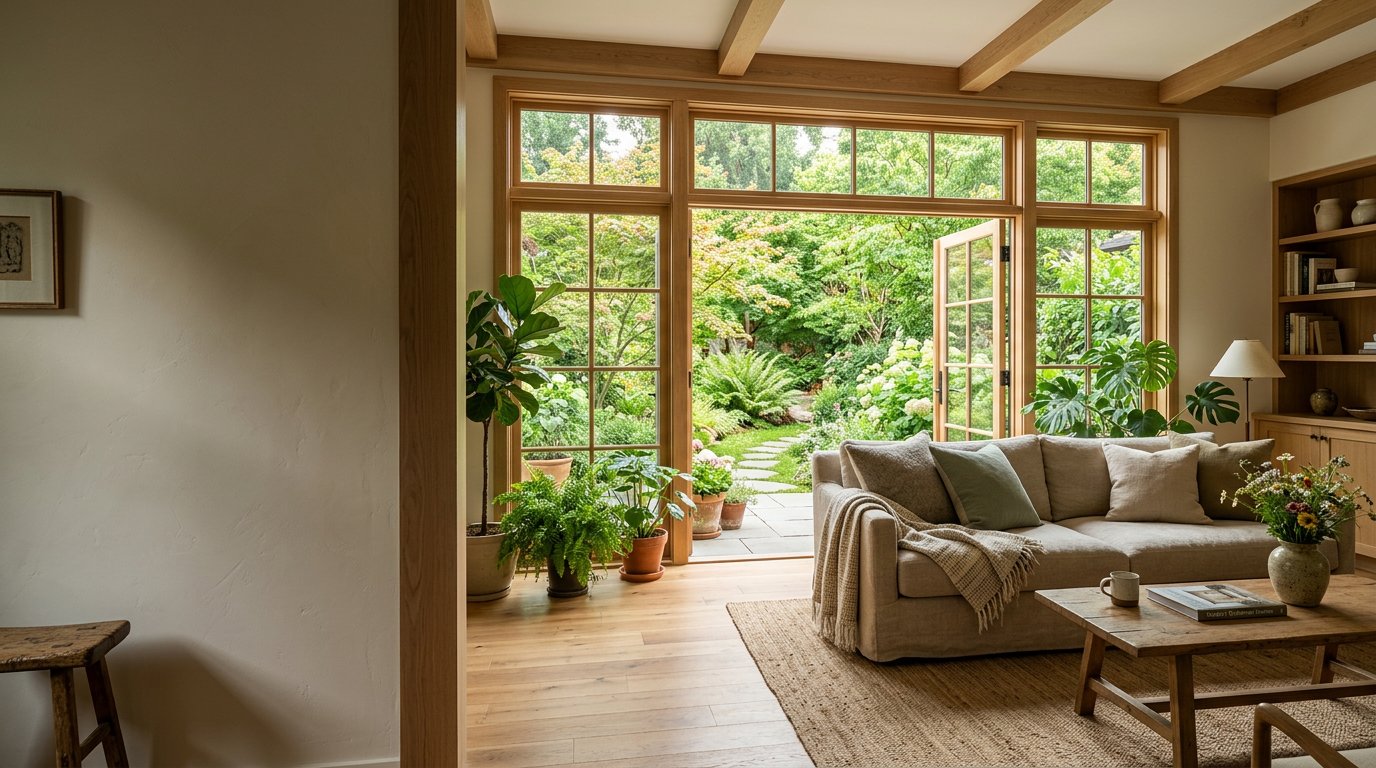
Before choosing a paint color or browsing for a new sofa, pause and notice what already works. Maybe the morning light is lovely, but the chair is always in the way. Perhaps a room feels busy because it has no clear place for the things you use every day. A small observation can lead to a more useful plan.
Start with the feeling
Think about the mood you want in the room. Do you want it to feel restful, sociable, bright or tucked away? A simple description can help guide choices around color, lighting, texture and layout without making the room feel overly styled.
Natural materials and familiar pieces often make a space feel grounded. A softer rug, a lamp near the place you read, or a small table by the entry can change the experience of a room without changing its structure.
Make the room work for the routine
Notice what happens during an ordinary day. Where do bags land? Where do shoes gather? Is there a place to put a cup or set down a book? Thoughtful storage and a clear path through the room can make daily life feel easier.
Design choices feel most lasting when they support the way a home is actually lived in.
Give yourself room to evolve
You do not have to decide everything at once. Try moving a lamp, editing a shelf or shifting a piece of furniture before making a larger commitment. Living with a small change can reveal what the room needs next.
When you are ready to invest in a bigger update, keep a record of the ideas you like and the practical needs behind them. That gives a designer or contractor a clearer picture of what matters most to you.
A home can change with you
The best room is not the one that looks finished for someone else. It is the one that welcomes your real routines and gives you space to feel at ease. A thoughtful adjustment can be enough to make that feeling begin.